
There is an increasing number of people suffering from Anxiety or Depression particularly brought about by the Covid pandemic globally. You probably know of someone— maybe even a close family member or friend— who may be suffering or has suffered from Anxiety/ Depression at some point in their life. Personally, I know friends and colleagues who have lost loved ones through suicide and with no indication that they were going through any difficulties leading to anxiety, depression and eventual loss of hope.
In 2017, the World Health Organization (WHO) declared Depression a global emergency with more than 300 million people suffering from Depression worldwide. That’s an increase of more than 18% since 2005— over a span of just 12 years! It’s so prominent that there’s even a term for it: Depression Epidemic.
As there has been a significant sharp increase in Anxiety/ Depression among children, teenagers and young adults, especially with the onset of the Covid pandemic, I hope that sharing some research findings may help to raise awareness of the issue and provide ways for families to cope.
The Real Reasons Why Anxiety/ Depression is on the Rise
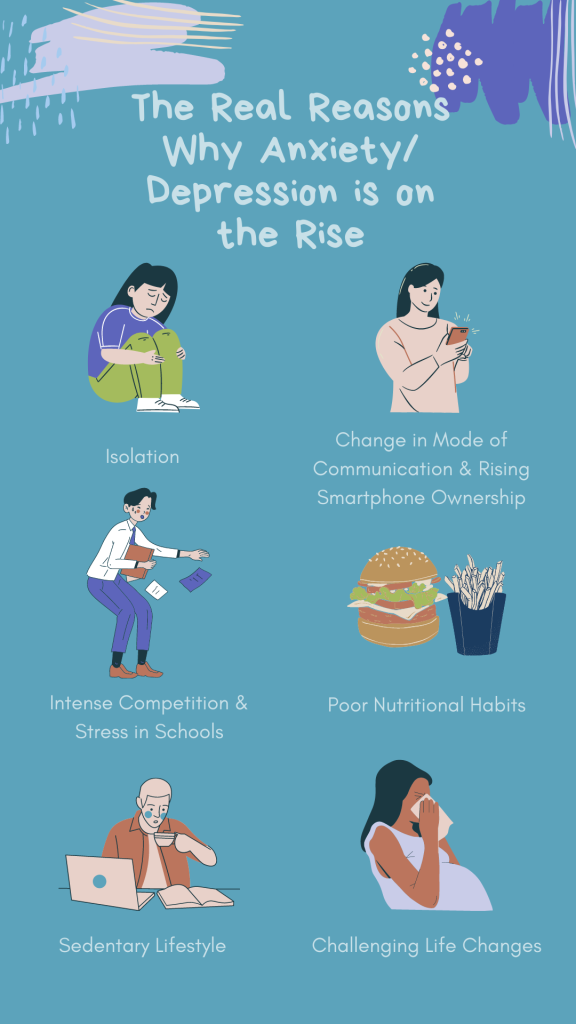
The steep rise of Anxiety/ Depression is the result of multiple causes converging— something experts call the “Perfect Storm”. Based on studies from around the world, these are some of the possible causes:
- Isolation
With the rapid growth of our industry and technology in recent years, people are becoming increasingly disconnected from their family, friends and neighbours. Folks are no longer living communally with three generations under one roof. Our communities are shrinking, and this can lead to isolation and loneliness.
- Change in Mode of Communication & Rising Smartphone Ownership
Social media like Facebook, Instagram and WhatsApp have gradually replaced our face-to-face interactions. However, it cannot replace the face-to-face communication which involves body language, tone of voice and physical contact. This has led to a deficiency of oxytocin, the ‘love’ hormone which keeps us happy.What’s more, the ease of accessing social media on our smartphones has led to many children and teens spending three hours or more per day on social media, correlating to the spike in cases of Anxiety/ Depression.
- Intense Competition and Stress in Schools
Academic success is often equated with social and economic “success”, resulting in high stress and a decline in psychological well-being— particularly so in East Asian countries, where there is also a high suicide rate.
- Poor Nutritional Habits
Changing eating patterns may have contributed significantly to the Depression Epidemic, as consuming junk food, highly processed food and irregular meals may lead to lifestyle diseases such as diabetes and heart diseases, which have been linked to Anxiety/ Depression.
- Sedentary Lifestyle
People nowadays also lead a more sedentary lifestyle, where children are no longer running in fields or playing outside the home as their parents did. Children now generally prefer playing computer games in the room, and adults tend to spend more time on their devices rather than arranging for meet-ups. This sedentary lifestyle has been shown to increase the risk of depression across all the ages.
- Challenging Life Changes
Everyone goes through life changes, but some could be more challenging than others, especially in these past two years when the global Covid pandemic brought these changes. It could be divorce, conflict in your marriage or relationship, taking on a stressful project at work, unemployment, migration/ relocation, losing a loved one or developing a long-term medical condition— these difficult life changes can often lead to Anxiety/ Depression.
Ways to Manage Anxiety/ Depression

Yet, on a positive note, studies have also shown that there are effective ways to manage Anxiety/ Depression. Here are some of the recommended ways:
- Seek Professional Help
Look up nearby professional counselling services, call a counselling helpline, such as Samaritans of Singapore (SOS) and the Institute of Mental Health (IMH), or reach out to your religious/ support group. For youths who are at their most vulnerable phase of life, parents can help by being aware of the help available, such as school counselling and the Tinkle Friend helpline for younger primary-school children.
- Find a Community of Support
Create multiple platforms and opportunities for yourself/ your child to interact with and integrate into the community. Build social support with your neighbours, schoolmates, colleagues and religious groups, and make it a point to attend more social bonding activities. If joining a social group is too overwhelming at the moment, you can try volunteering with children or chatting with an elderly neighbour. Social integration and bonding should be a way of life. Nurture a caring and supportive culture in your sphere of influence and also contribute to others’ well-being.
- Get Educated on Cyber Awareness
Learn about how the use of social media is affecting your state of mind or your child’s. Read up on how you can support your child with cyber wellness. It is especially important for the impressionable young to learn healthy boundaries and good digital habits early on.
- Eat for Good Health
Change up your diet to include less processed foods and more whole foods, especially fruits, vegetables and legumes. You can still have the occasional sweet treat, of course, just remember that everything should be in moderation. A healthy diet will contribute not only to your improved physical well-being but your psychological well-being.
- Adopt an Active Lifestyle
Get active with exercise and outdoor activities. Just stepping out into the sun works wonders as it triggers positive chemicals in our bodies. Sunlight boosts serotonin which is responsible for stabilising mood and happiness.
- Get In-tune with your Social-emotional Side
Learn to manage stress effectively by finding ways to help yourself regulate. For some, it’s journaling; for others, it’s listening to music. Take time to be count the things you’re grateful for each day and practise kindness. A powerful tool is also positive visualisation— that means thinking about your cup as “half full” rather than “half empty”. It’s important to build resilience and coping skills for your mental well-being in the long run. You can read more on our self-care tips in the New Normal here.
In conclusion, though Anxiety and Depression is on the rise, there are preventive measures you can take and coping methods for better psychological well-being. Let’s be proactive in reaching out to the vulnerable around us and build a community of support.
May Tan
Counsellor, Family Wellness
Stressed at work or school? Feeling alone and need a listening ear? Share about it with our Counsellors or Therapists
You may wish to refer to The Perfect Storm, published in Psychology Today by Author Mark Setton, D. Phil, who teaches at the University of Bridgeport. He is also the co-founder and CEO of Pursuit of Happiness. It is an interesting article and a good read which provides new learning for all of us including those in the helping profession— Counsellors and Therapists
Read more